Study Table Design: Work and Study Corners at Home
A study table that is the wrong height causes more back and neck pain than any chair. Start with the right size for the person using it, then fit the design to the corner you have.
- Adult desk height (Wakefit)
- 75 to 76 cm
- Adult desk depth (Wakefit)
- 60 to 75 cm
- Adult desk width (Wakefit)
- 120 to 150 cm
- Child (6 to 10) desk height (Wakefit)
- 52 to 60 cm
- Teen desk height (Wakefit)
- 65 to 72 cm
- Space behind chair (Asian Paints)
- 48 in
14 Study Table Design ideas
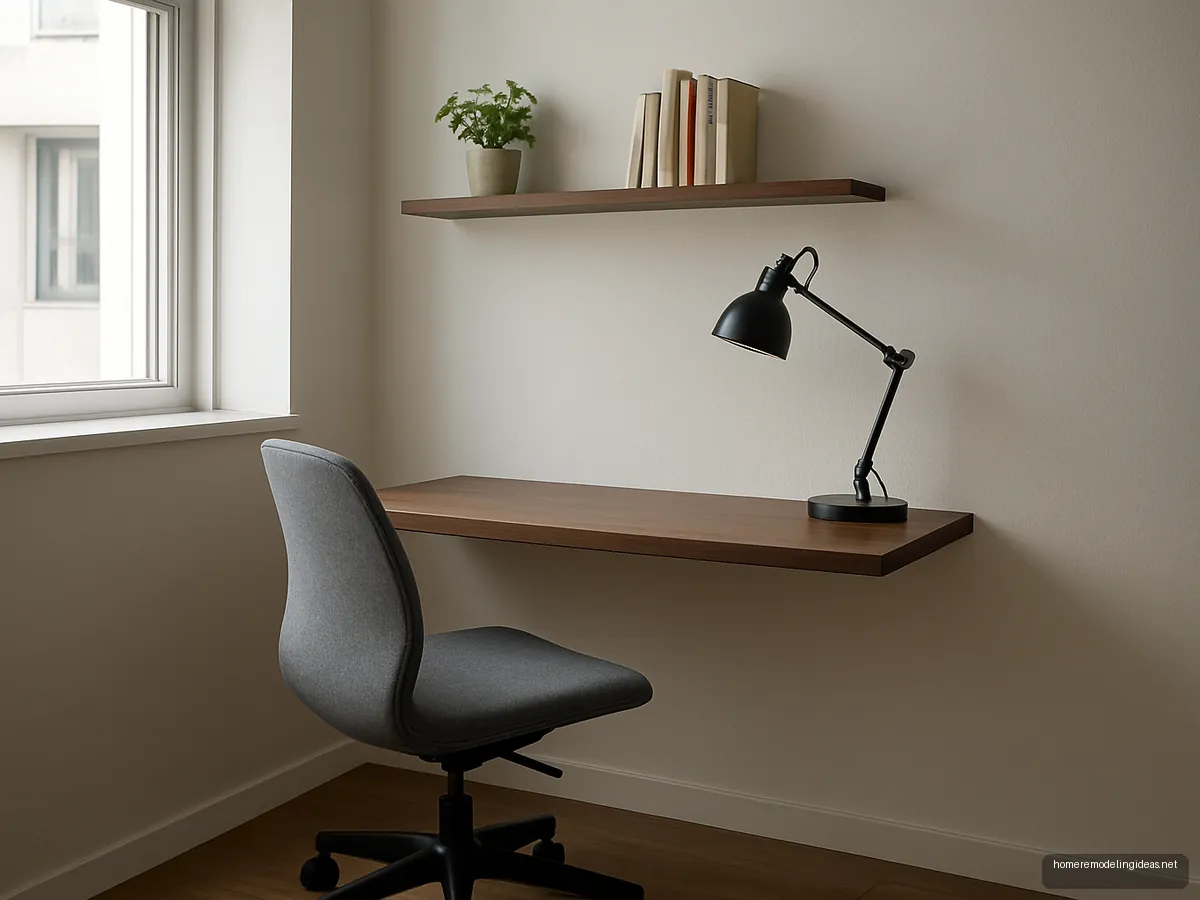 01
Floating Walnut Wall Desk
A wall-mounted walnut desk with no legs keeps the floor clear in a small bedroom. Fix it into a solid wall with concealed brackets, and add a slim shelf above for daily books.
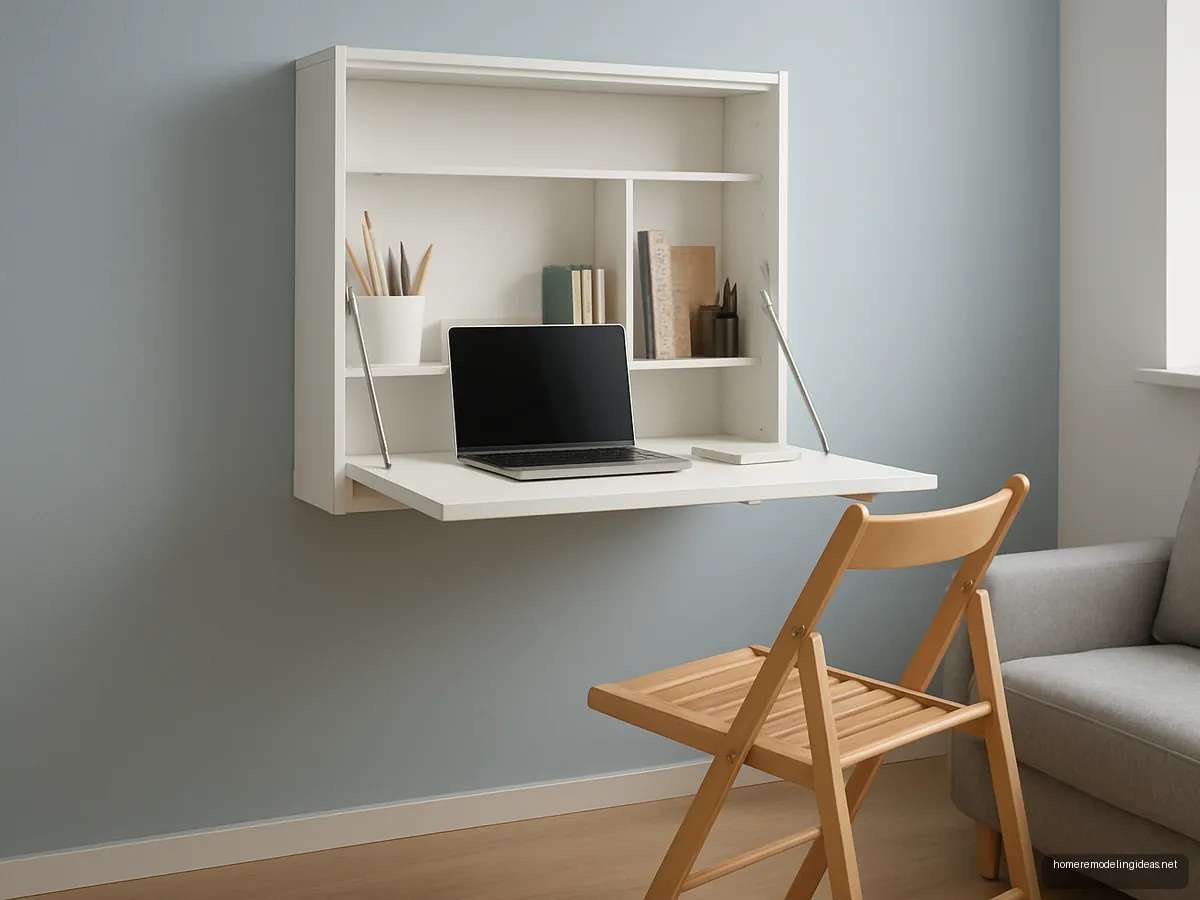 02
Fold-Down Murphy Desk
A cabinet front that drops down into a desk, with cubbies inside. When closed it looks like a slim wall cabinet. Best for occasional work or homework rather than all-day use.
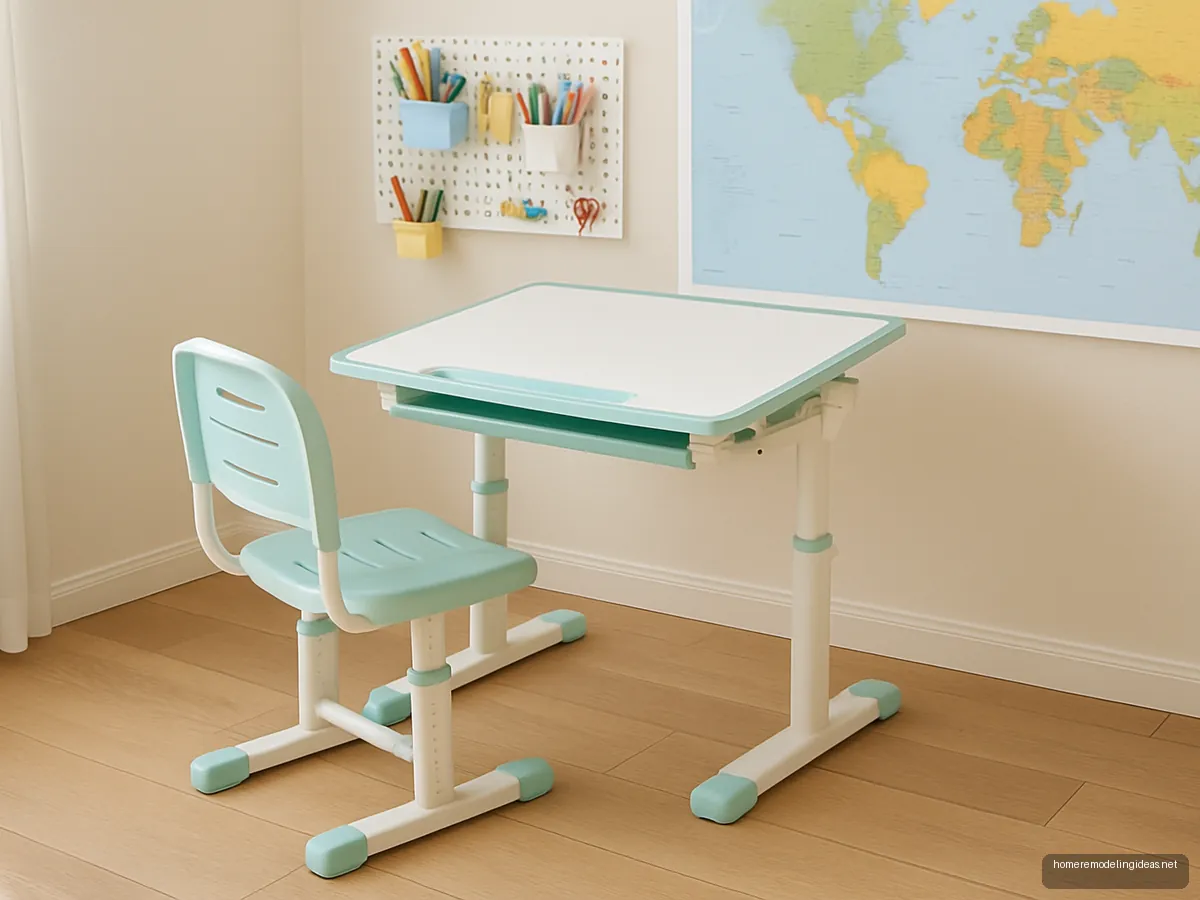 03
Kids Height-Adjustable Desk
An adjustable desk in pastel mint grows with the child from primary school to teens. Pair with an adjustable chair and footrest so elbows stay level with the top.
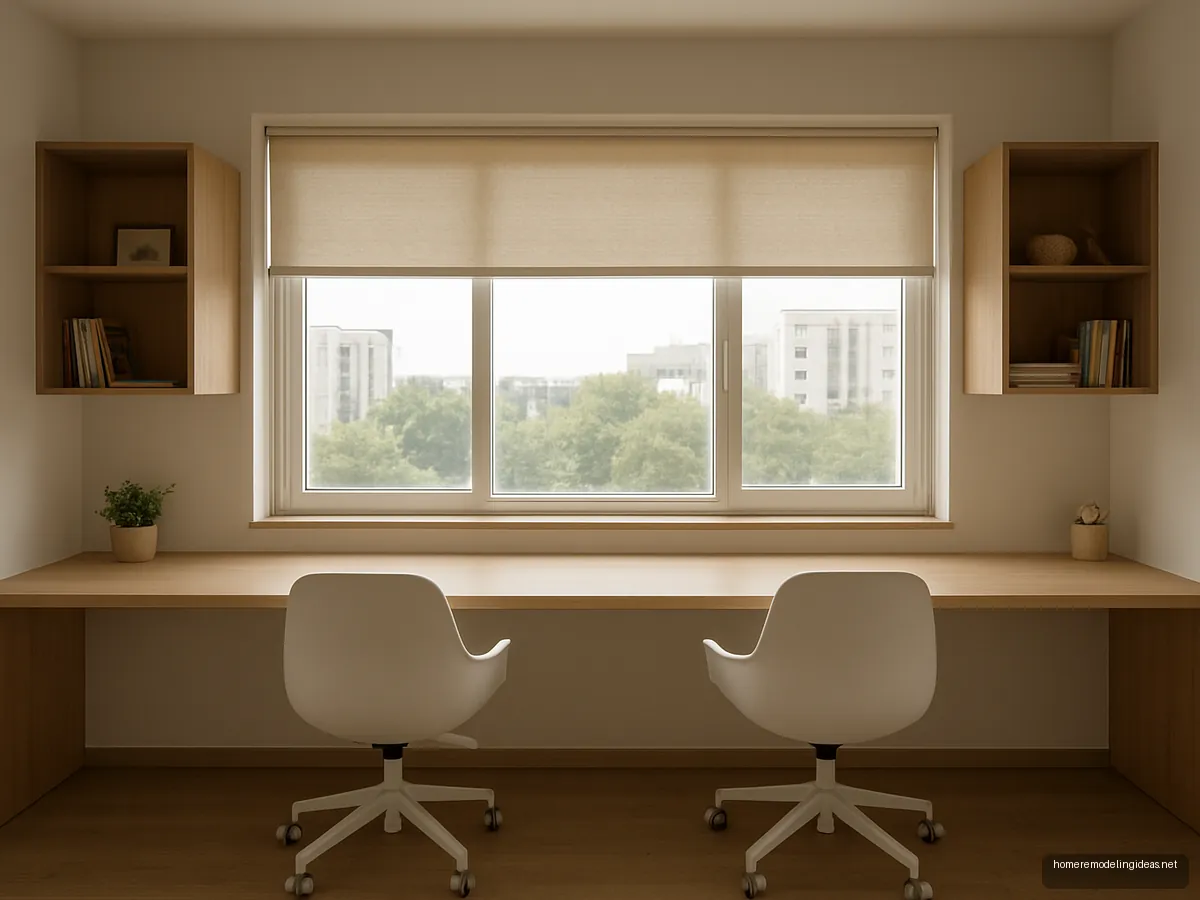 04
Window Ledge Long Desk
A long counter running under a wide window seats two students side by side with plenty of daylight. Use roller blinds to cut glare on screens in the afternoon.
 05
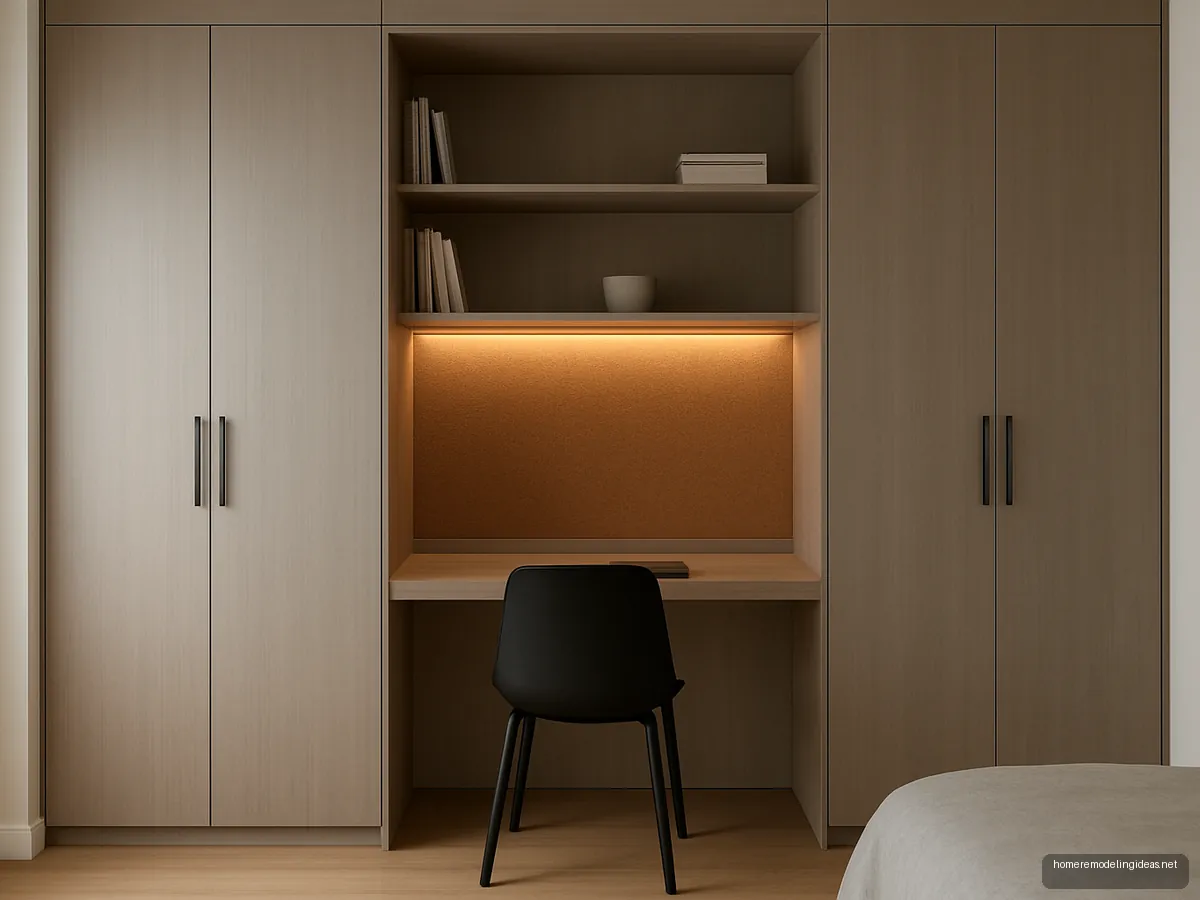
Wardrobe Niche Study
A study niche built into the wardrobe run, with overhead shelves and a pinboard. Uses the same finish as the wardrobe so the wall looks unified.
 06
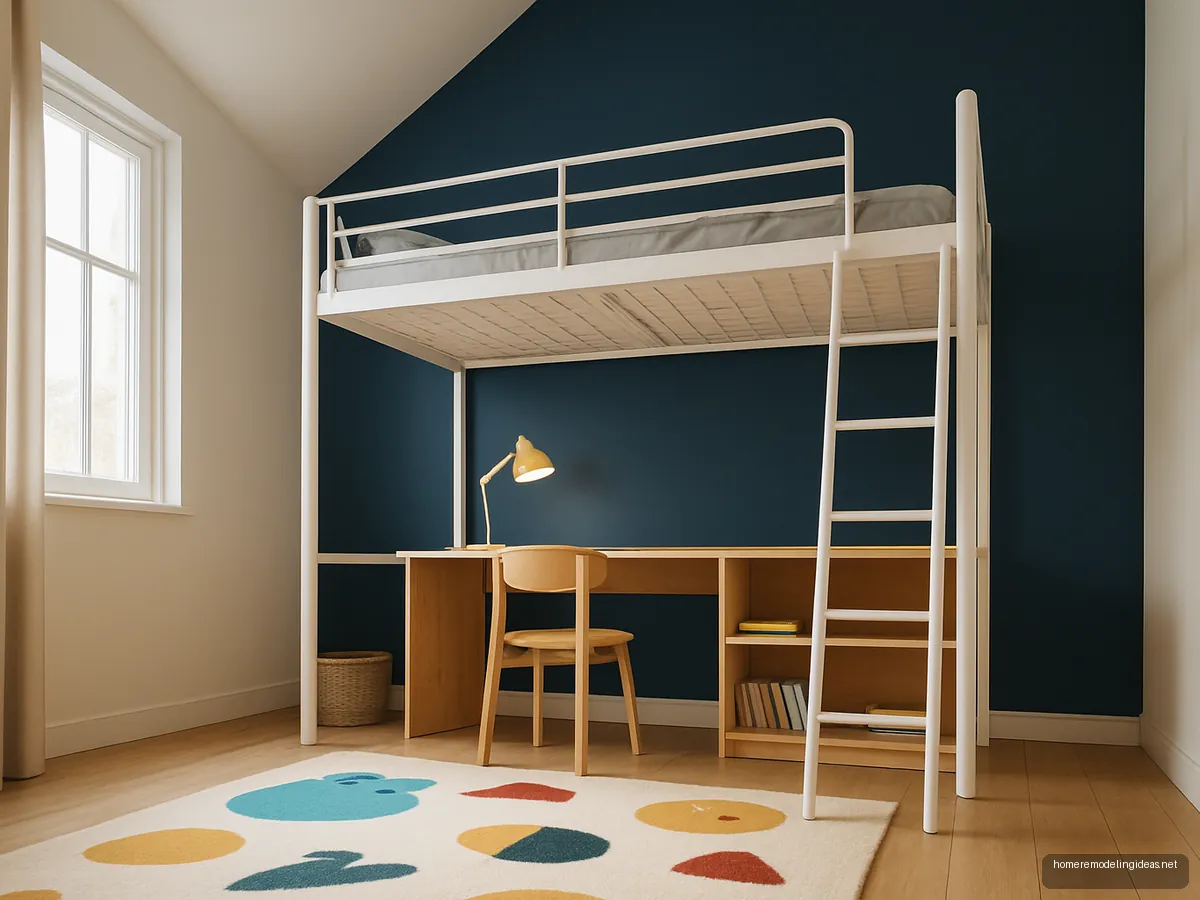
Loft Bed With Desk Below
A loft bed with a full desk underneath frees floor space in a kids room with a high ceiling. Add a guard rail and fixed ladder for safety.
 07
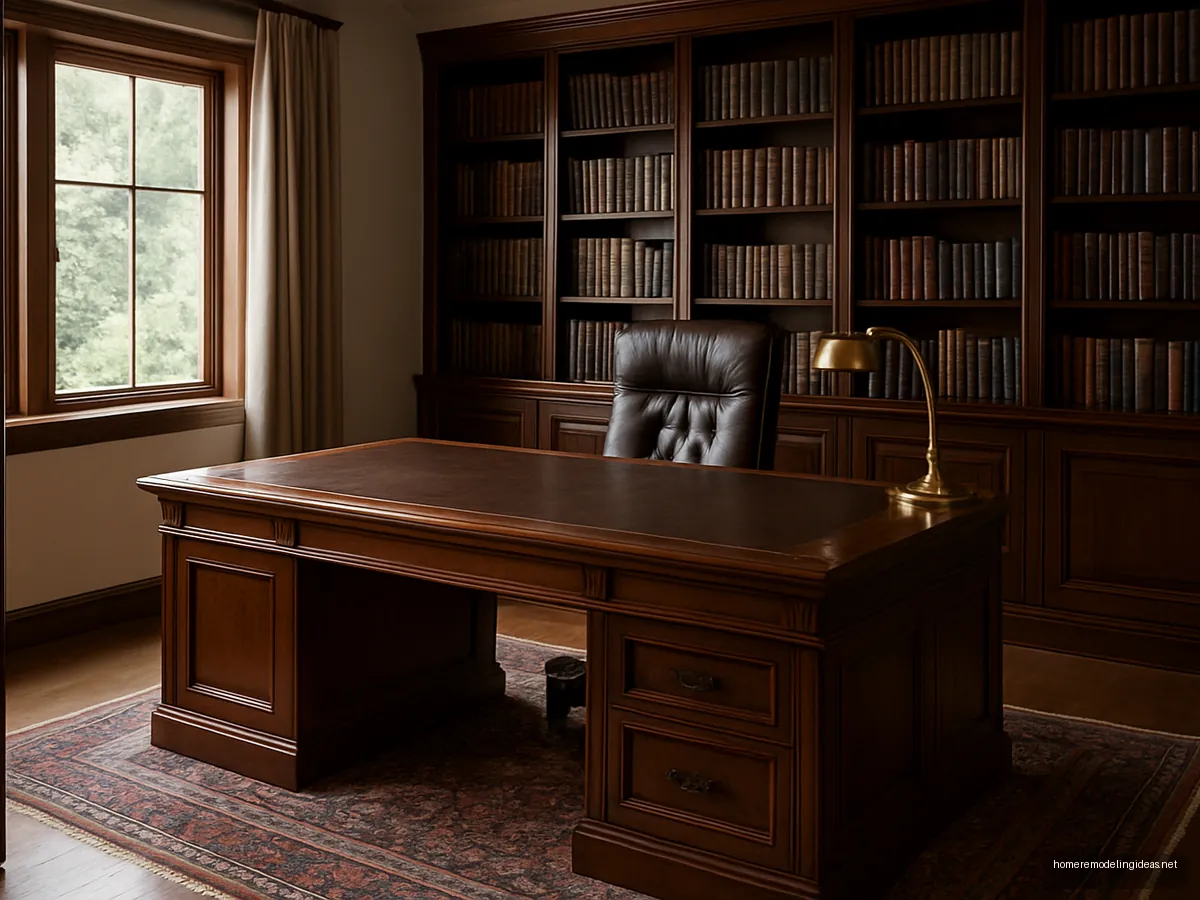
Executive Teak Home Office
A solid teak executive desk in a spare room for serious work from home. Leave 48 in behind the chair and place the desk so window light falls from the side.
 08
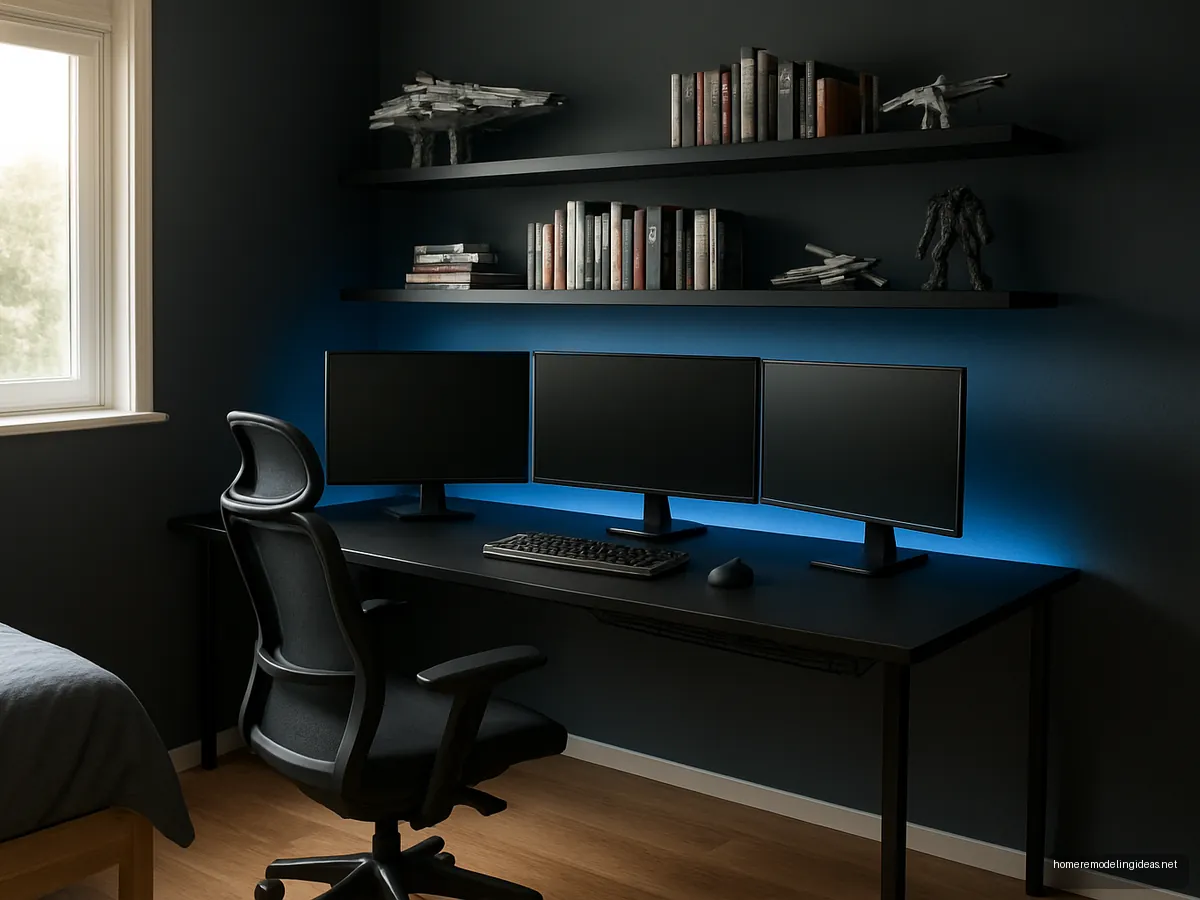
Corner L-Desk Gaming Setup
An L-shaped corner desk gives room for two monitors and a laptop. Add a cable tray and grommets so wires stay hidden, and keep the main screen straight ahead.
 09
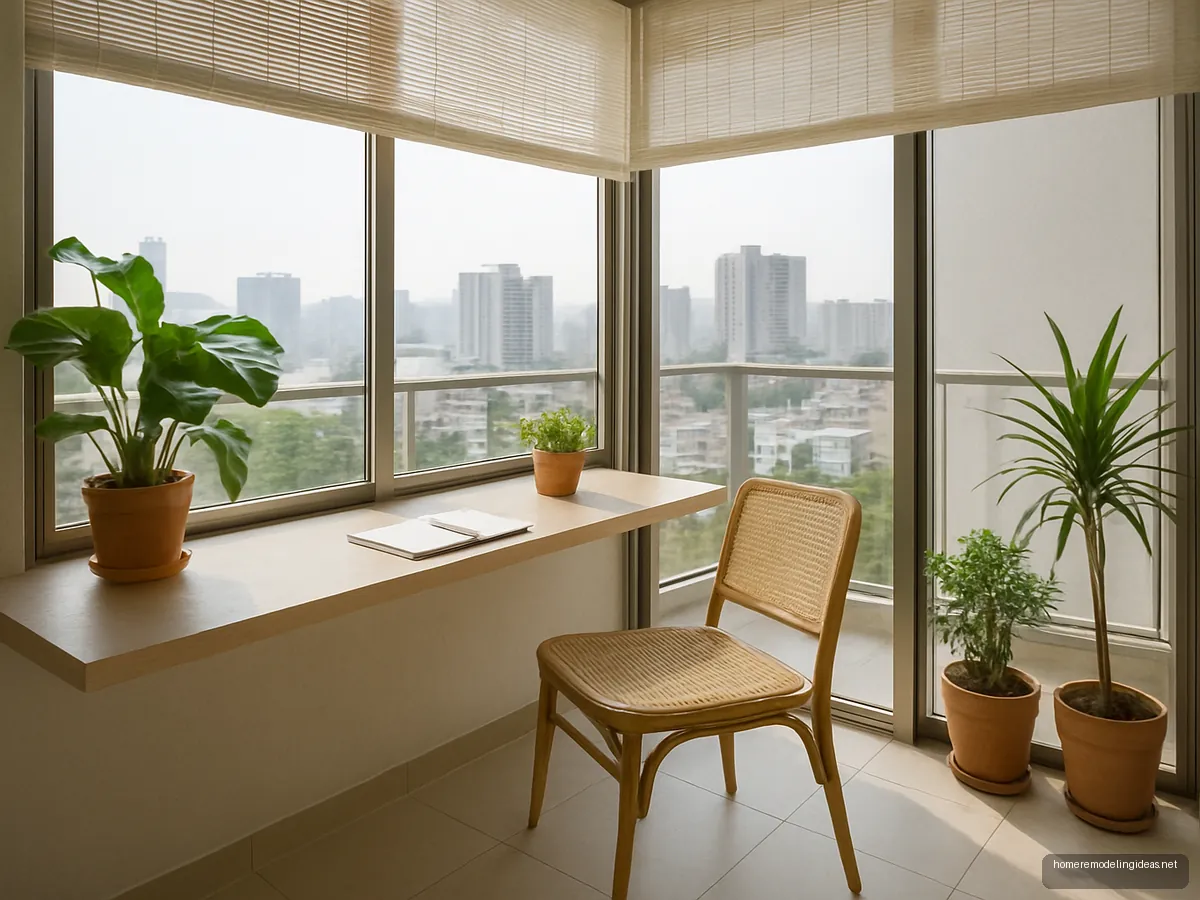
Balcony Glass Enclosed Study
An enclosed balcony converted into a small study with a slim desk, plants and blinds. Only works if the balcony is shaded and sealed from dust and rain.
 10
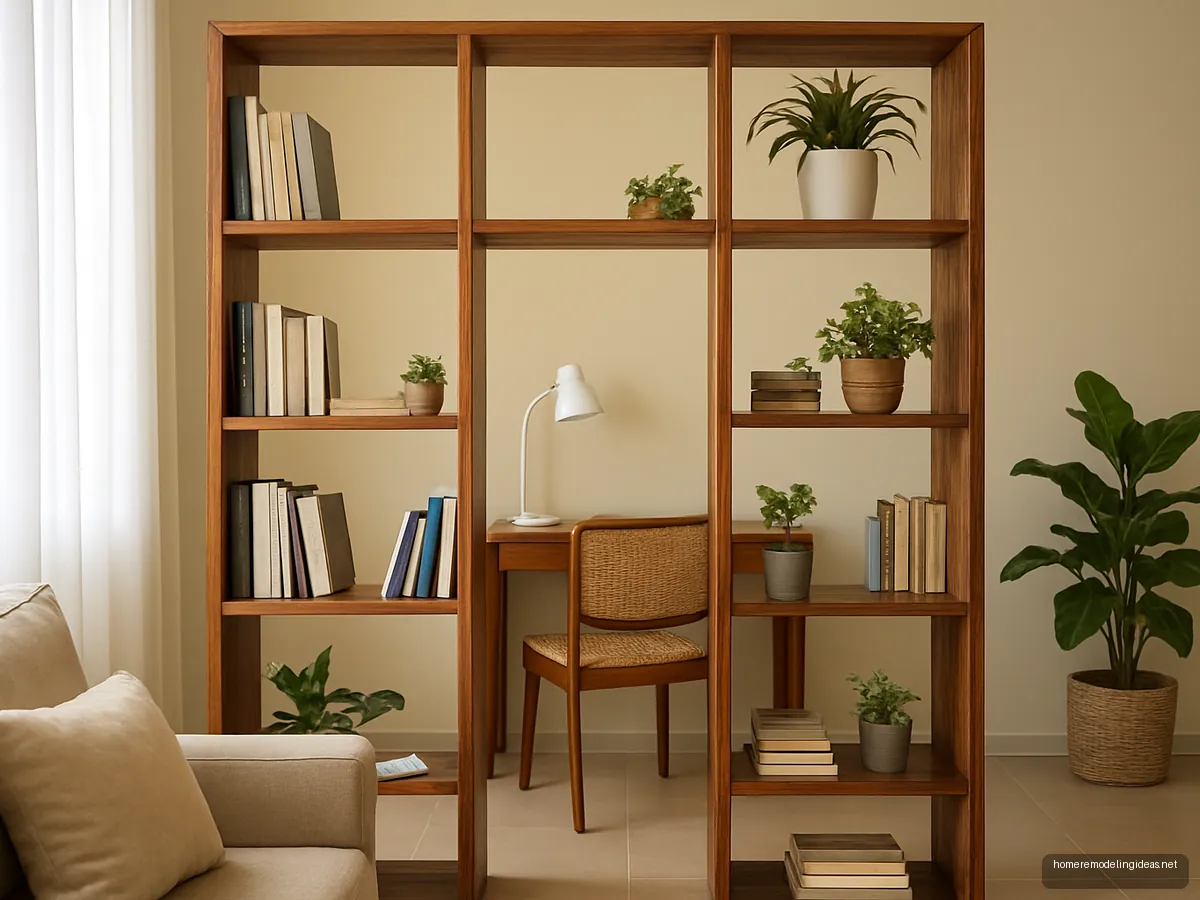
Bookshelf Divider Study Corner
A tall open bookshelf separates a study corner from the living room without blocking light. The desk faces a wall to cut distractions from the TV.
 11
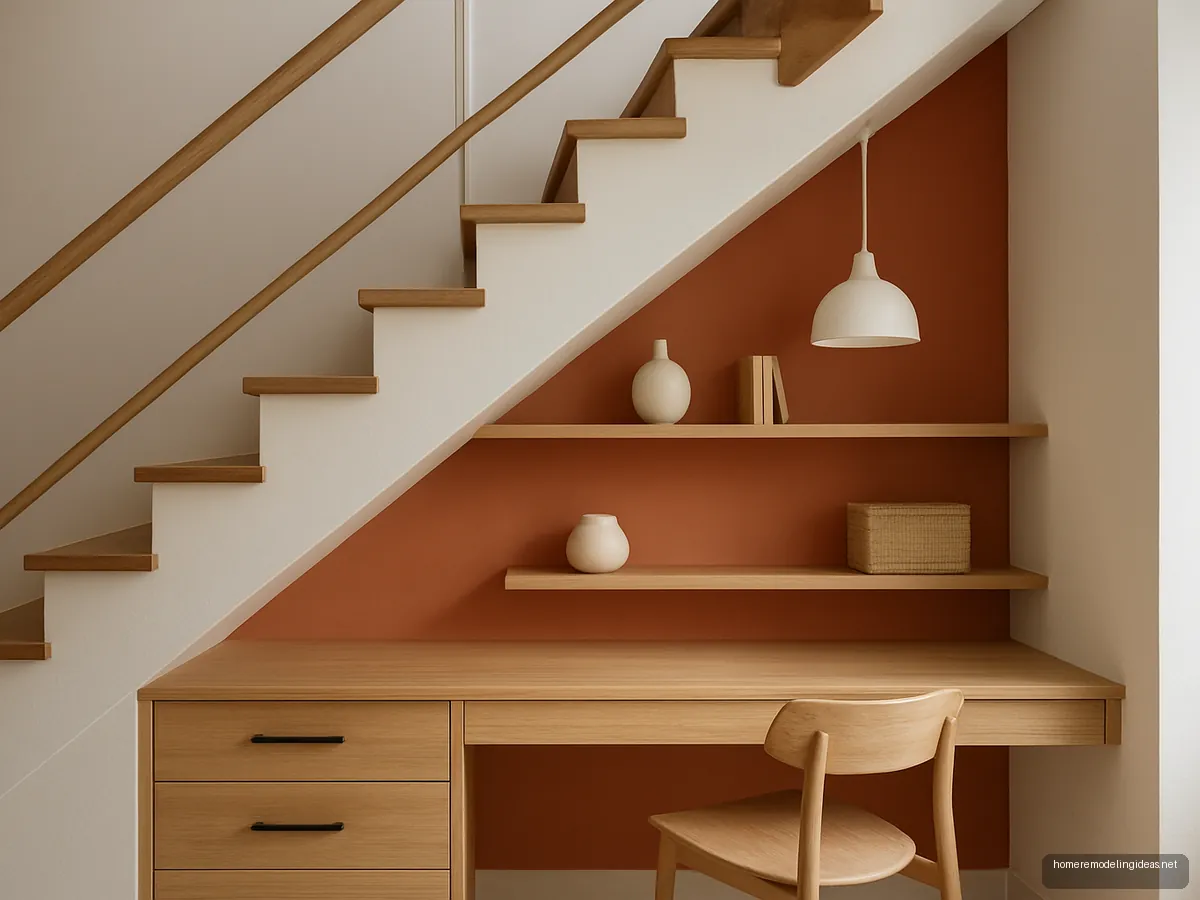
Under-Stairs Study Nook
The space under a duplex staircase becomes a study nook with a built-in desk and drawers. Add a strong task light since daylight rarely reaches here.
 12
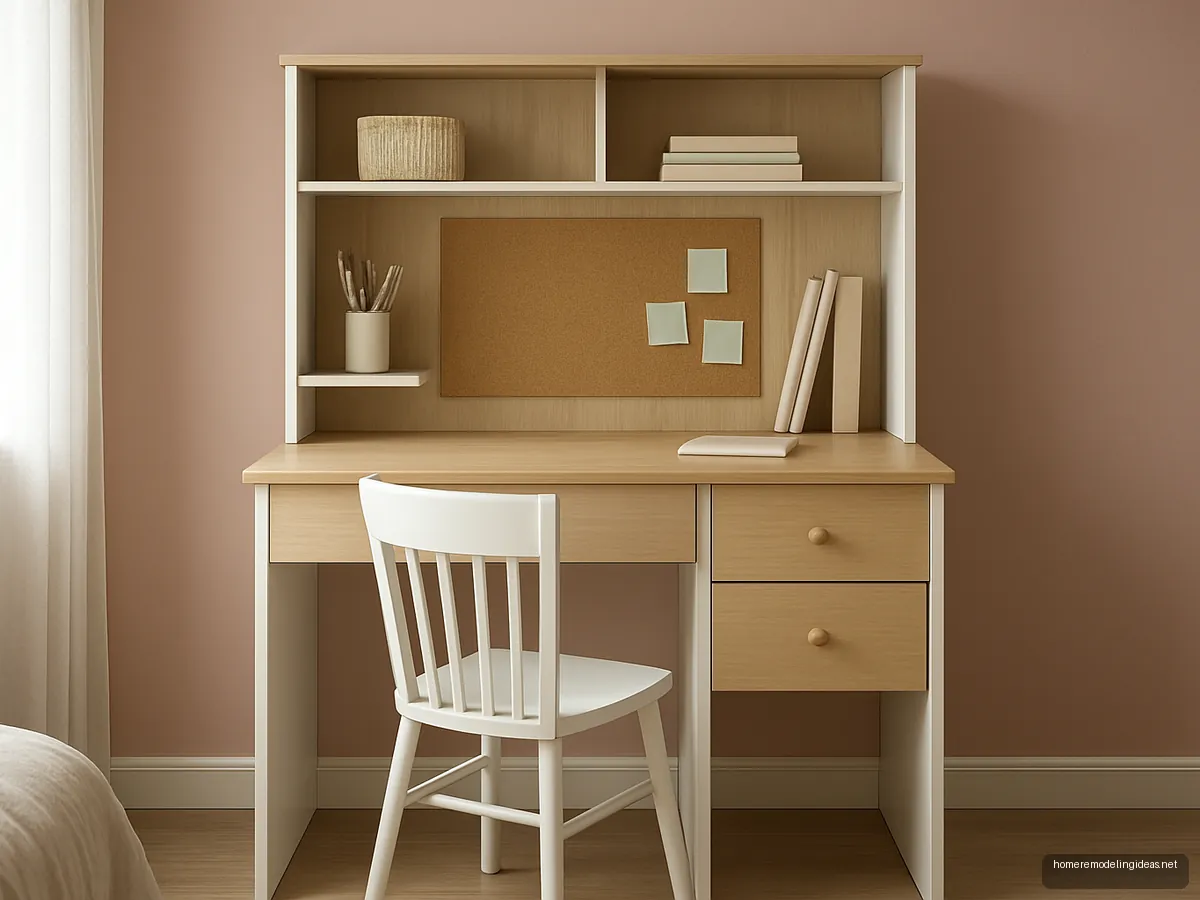
Two-Tone Desk With Hutch
A study table with a hutch on top in white and light wood gives shelves, a pinboard and drawers in one unit. Good for students who need everything in reach.
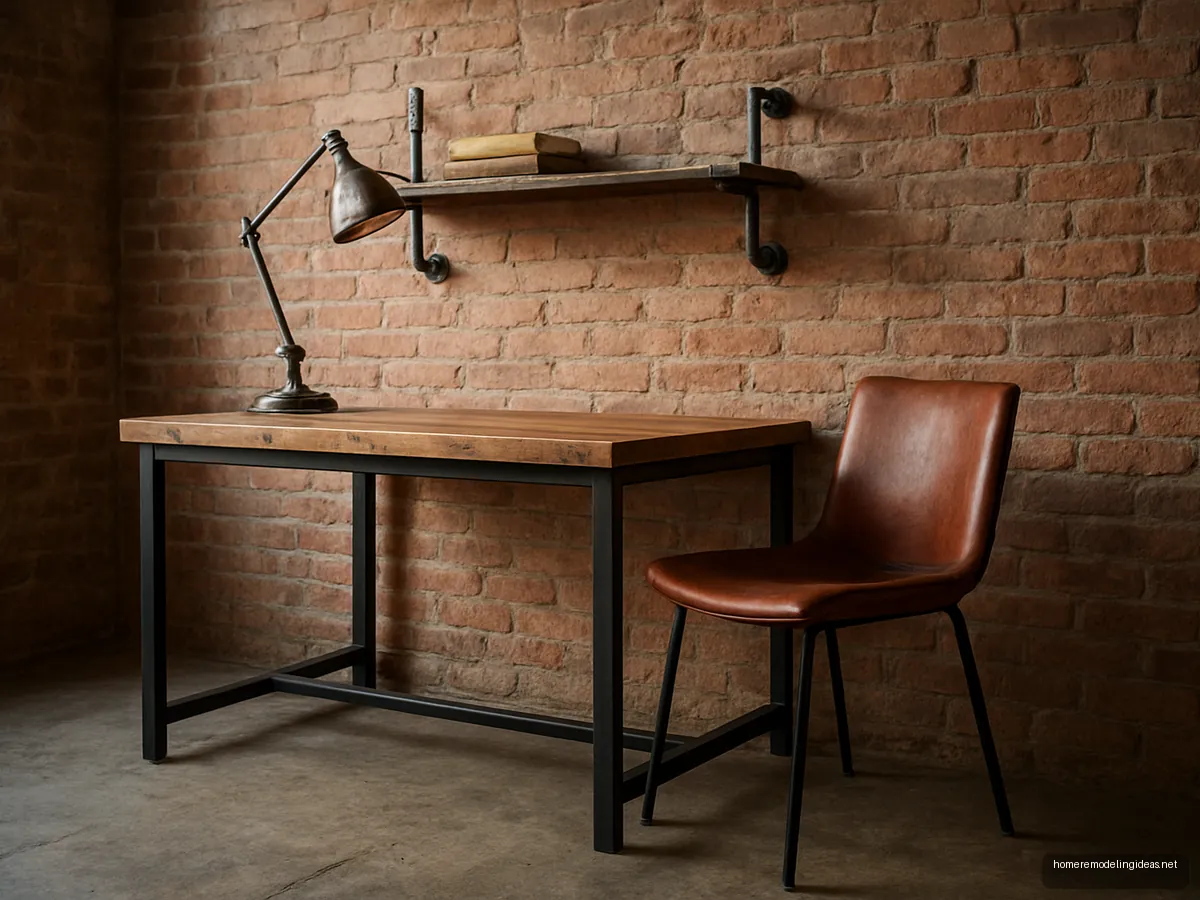 13
Industrial Metal and Wood Desk
A black metal frame with a thick reclaimed wood top suits loft-style homes. Sturdy and easy to move between rooms; seal the wood top and add felt pads to protect floors.
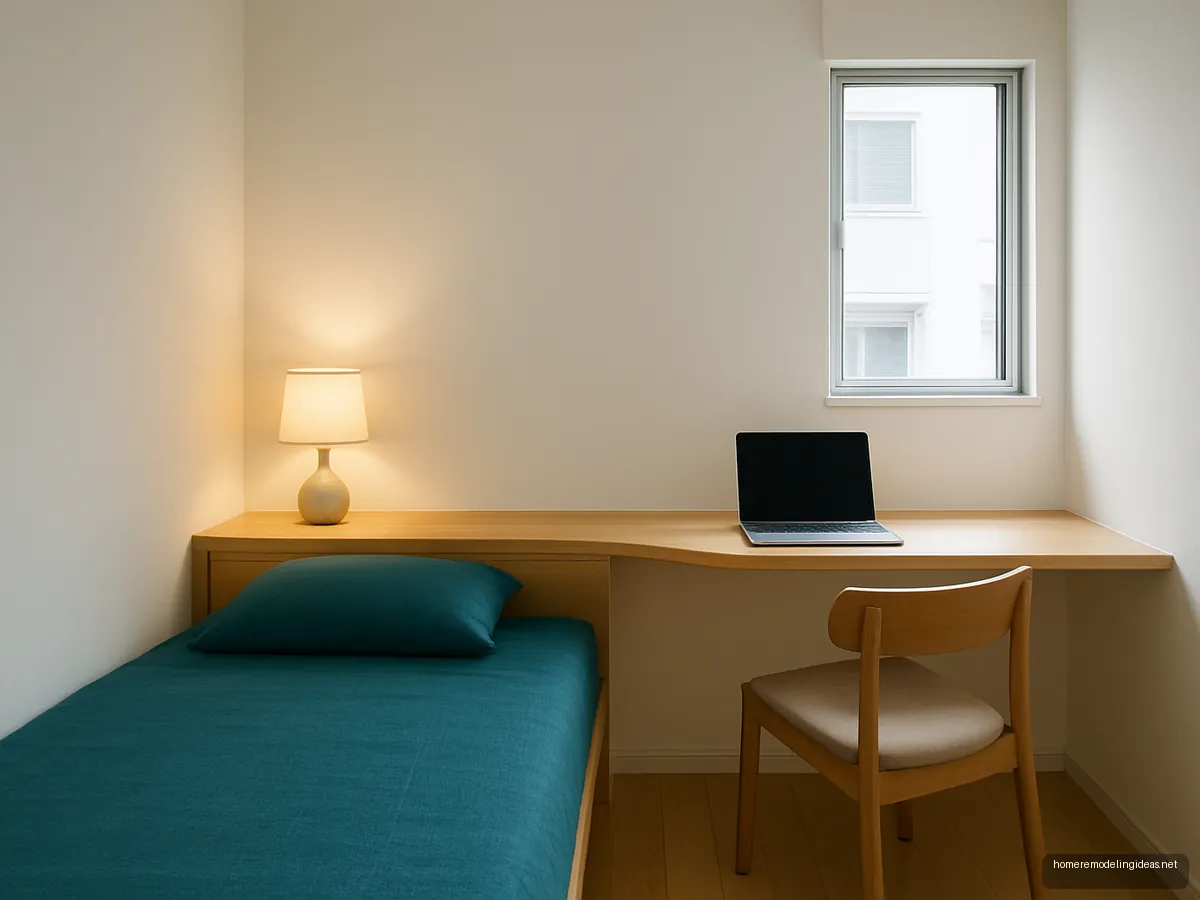 14
Bedside Desk Combo
A narrow desk that doubles as a bedside table in a guest or single-occupancy room. Keep the desk end clear of drawers so there is knee room, and use the bed end for a lamp and phone.
Illustrative design concepts. Sizes, finishes and prices vary by maker and city, so confirm details with your designer or carpenter.
Since work from home and online classes became normal, the study table has moved from a kids-room item to something almost every Indian home needs. Often it has to fit into a bedroom corner, a balcony nook or the end of the dining area, and still be comfortable for hours.
This guide gives desk sizes for adults, teens and children from Wakefit's size guide, explains the ergonomics that matter, and shows 14 study table and home office designs, from wall-mounted fold-downs to full study rooms. For bedroom planning, see bedroom furniture design.
Study table sizes by age
Wakefit's study table size guide (September 2026) gives these figures:
| User | Desk height | Other sizes |
|---|---|---|
| Child (6 to 10 years) | 52 to 60 cm | Pick a desk that can be raised later |
| Teen | 65 to 72 cm | Full-size depth helps for books plus laptop |
| Adult | 75 to 76 cm | Depth 60 to 75 cm; width 120 to 150 cm |
Wakefit also gives a minimum knee clearance of 65 cm under the desk, with 70 cm being comfortable, and suggests keeping a monitor 50 to 70 cm from the eyes. Asian Paints Beautiful Homes suggests leaving 48 in behind a study chair so you can push back and get up easily.
For a growing child, an adjustable-height desk or an adjustable chair with a footrest saves you buying a new table every few years.
Ergonomics that actually matter
- Elbows level with the desk: sit with shoulders relaxed and forearms resting flat. If the desk is too high, raise the chair and add a footrest.
- Feet flat: on the floor or a footrest, thighs roughly parallel to the floor.
- Screen at eye level: top of the screen at or slightly below eye level, 50 to 70 cm away (Wakefit). For laptops, use a stand and an external keyboard.
- Light from the side: place the desk so window light falls from the side, not behind the screen (glare) or behind you (shadow). Add a task lamp on the side opposite the writing hand.
- Knee room: avoid drawers directly under the writing area; Wakefit's minimum knee clearance is 65 cm.
- Chair matters as much as the table: an adjustable chair with lumbar support is worth more than an expensive desk.
Wall-mounted and space-saving options
In 1 and 2 BHK flats, the study table often has to share a room.
- Wall-mounted floating desk: no legs, so the floor stays clear. Needs a solid wall and strong brackets; keep depth at least enough for a laptop and a notebook.
- Fold-down desk: a cabinet whose front drops down into a desk. Good for occasional use; less comfortable for long hours because depth is limited.
- Desk in the wardrobe run: a gap in a wardrobe wall with overhead shelves becomes a neat study niche.
- Bed plus desk combos: a loft bed with a desk below suits kids' rooms with high ceilings; see single and kids bed designs.
- Window desk: a long counter along a window gives light and a view; plan for curtains or blinds to control glare.
Storage above and around the desk
Most study tables fail because there is nowhere to put books and chargers, so the desk itself becomes storage.
- Open shelves above the desk for books in daily use; closed cabinets higher up for files.
- A pinboard or magnetic board at eye level for timetables and notes.
- One drawer unit to the side, not under the knees.
- A cable tray under the desktop and a grommet hole for chargers.
- Plan sockets at desk height during renovation; it is far neater than extension boards. See the renovation checklist for when to plan electrical points.
Materials and finishes
Most built-in study tables use plywood or engineered board with a laminate top. Greenply describes MR plywood as suited to dry interiors; for a study table, a firm top that does not flex under elbow weight is what matters. Particle board and MDF are covered by BIS standards IS 3087:2025 and IS 12406:2025, with E1 as the lower formaldehyde class; ask for E1 in rooms where children study for hours.
A matte laminate top is easier on the eyes than gloss, which reflects lamp light. Solid wood tops (sheesham, teak) feel warm and last long but need coasters for tea cups. For more on materials, see furniture design.
Where to put the study corner
- Kids room: near the window, facing a wall to reduce distractions, within sight from the door.
- Master bedroom: a desk at the side of the room, away from the bed's direct view, so work does not take over rest.
- Living room: a corner behind the sofa or beside the TV unit, with a room divider or bookshelf as a screen.
- Balcony: only if enclosed and shaded; heat and dust make open balconies hard for daily work.
Vastu traditions often suggest facing east or north while studying. Treat that as a traditional belief; practical factors like light and quiet matter more.
Frequently asked questions
What is the standard height of a study table?
Wakefit gives 75 to 76 cm for an adult study table, 65 to 72 cm for teenagers and 52 to 60 cm for children aged 6 to 10. If one table must serve several ages, choose an adjustable desk or an adjustable chair with a footrest.
Study table ka size kitna hona chahiye?
For adults, Wakefit suggests 120 to 150 cm width and 60 to 75 cm depth, at 75 to 76 cm height. Keep at least 65 cm of knee clearance under the desk, and about 48 in behind the chair, as Asian Paints suggests, so you can move comfortably.
Is a wall-mounted study table strong enough?
Yes, if it is fixed into a solid brick or concrete wall with proper brackets and anchors. Avoid fixing heavy desks to thin partitions or gypsum walls. Keep heavy books on shelves rather than on the floating top, and check the fixings every few months.
How far should the monitor be from my eyes?
Wakefit suggests 50 to 70 cm between your eyes and the monitor. Keep the top of the screen at or a little below eye level. If you use a laptop for long hours, a stand plus an external keyboard and mouse is the simplest fix.
What is the best study table for a small room?
A wall-mounted floating desk or a fold-down desk saves the most floor space. A desk built into a wardrobe run also works well. Keep at least 60 cm of depth if possible, which is the lower end of Wakefit's adult range.
Which direction should a study table face?
Traditional Vastu belief favours facing east or north while studying, but this is a cultural tradition, not science. Practically, place the desk so daylight falls from the side, the screen does not reflect a window, and the student faces away from distractions like the TV or door.
Home office ke liye kaunsi chair best hai?
Choose an adjustable chair with lumbar support, adjustable seat height and armrests that slide under the desk. Your elbows should be level with the desktop and feet flat on the floor or a footrest. A good chair often helps more than a costly desk.
Sources: Wakefit: study table size guide · Asian Paints Beautiful Homes: bedroom layout dimensions · Greenply: MR vs BWR vs BWP plywood · BIS IS 12406:2025 MDF (FIPPI) · BIS IS 3087:2025 particle board (FIPPI). Figures checked 14 October 2026; prices and rates change, so confirm locally.